Are we Underestimating The Power of The Gap?
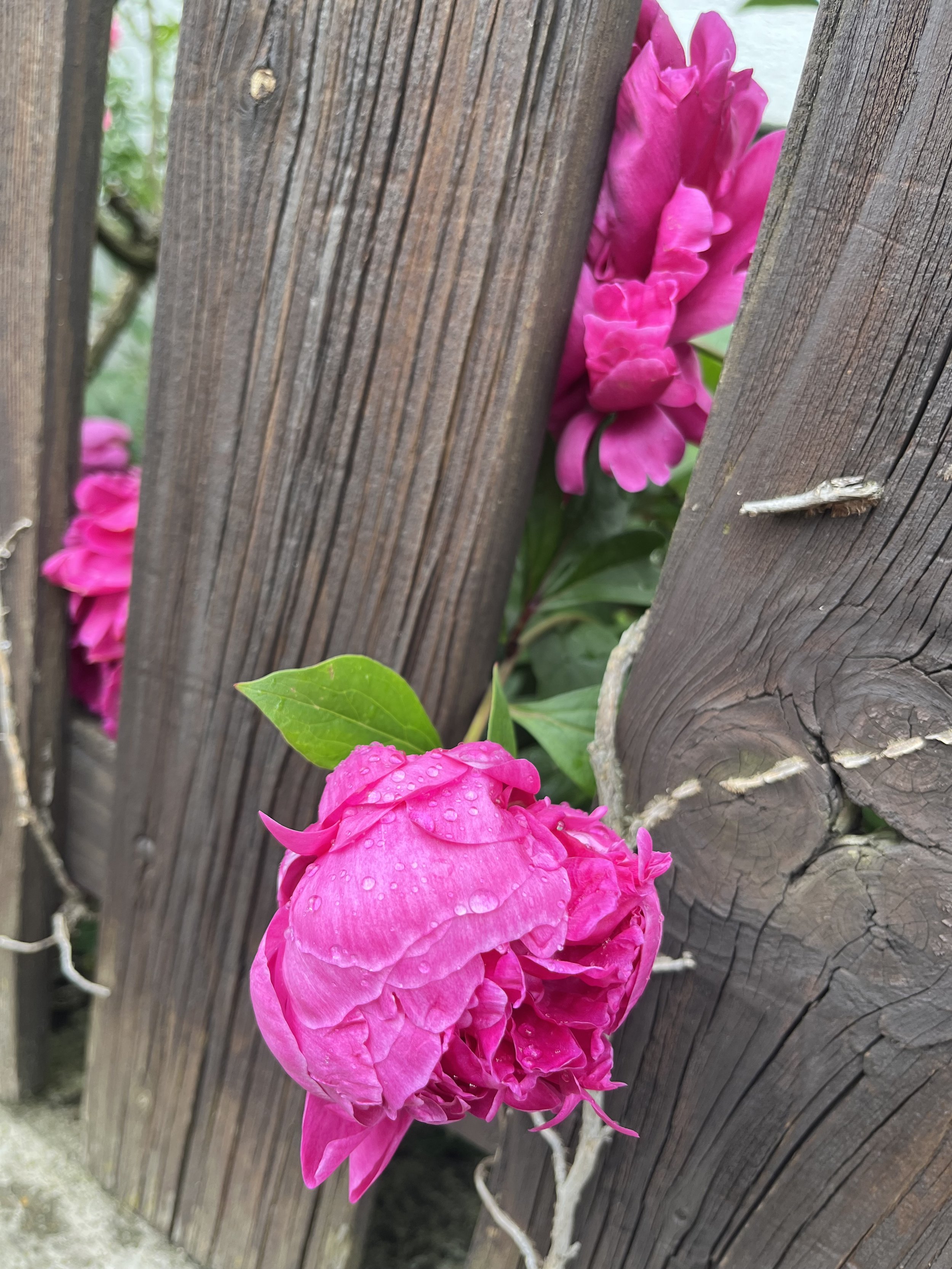
ON A RECENT WALK: SQUEEZING OUT THROUGH THE GAP TO EXPAND INTO THE WORLD
Lately, I’ve been regularly catching myself racing from one task to the next, leaving no gaps in between.
While it “should” seem as if I’m getting more done, surprisingly, when I come up for air from my haze of non-stop action, it often feels like I got less done of what matters most. It’s as if I’m losing sight of what matters by focusing too much on clearing the path of must-dos before getting to what really resonates.
It´s made me wonder:
What am I missing out on by not leaving a gap?
Am I evading discomfort that arises when I make space to feel what I truly want, rather than just ticking off a to-do list?
What could I gain from pausing to take a deep breath—not just throughout my day, but also in shaping the rhythm of my life?
As I’ve conditioned myself to run faster the more I feel the fear creeping up on me, it's a daunting cycle to break.
The gap is an interlude to let in the unknown, usually inviting itself in with its companions of doubt, uncertainty, fear, and more questions than answers.
Yet, gentle reminder to self:
The gap is also a space for chance, curiosity, the animating tingle of adventure, innovation, growth, and the unknowns that can steer our lives toward a course that suits us better.
A gap can feel challenging:
Admittedly, at first, a gap might seem unappealing, but there are also beneficial aspects to it.
The famous London tube gap between the train and the platform can be rather wide. On the Central line, especially at Bank station, the platform curve is so sharp that one end can’t be seen from the other, and the gap between the train and the platform can be as much as a foot wide (about 30 cm). Without that space, the train simply couldn’t navigate the curve.
Every time we leave gaps between the flowers on my mom’s balcony in spring, it looks disappointingly bland at first. Yet, every time we plant them too close for instant gratification, the flowers tend to crowd each other and sometimes even damage each other’s growth.
Many friends who took a gap year initially found it a lonely change from the steady rhythm of school life. Yet, apart from rare exceptions, most struggled when it was time to return, having grown into a new version of themselves who enjoyed the experience.
An employee who left a company I worked for told me that her biggest regret was not waiting a bit longer before taking the next job, as she finds herself caught in the same spiral of wondering: Is this the right thing? Why am I here?
The initial insecurity of a gap now seems much more appealing compared to the feeling of grinding away in a new environment.
There are gaps in our daily relations that can be deeply uncomfortable:
The empty nest phase, when children leave home. Friends of mine actually took a gap year of sorts as they struggled to find their footing, having to re-learn how to be with each other, which changed the dynamic of their relationship.
The silence after an argument, before reconciliation. It can be hard to give that inch, yet it can be the crucial interlude for letting clarity settle, releasing the tensions and energy of the argument, and moving on to the next phase.
The moment after sending a risky message or proposal. Often, when pushing for a reply too soon, we risk sabotaging a positive response, as feeling pressured can make the other person push back against something they might otherwise grow comfortable with.
Yet, in all of these cases, the gap presents an opportunity—a chance to let things sort themselves out, to let the dust settle, like waiting for the particles to settle after shaking a snow globe.
A gap can give our energy, thoughts, and actions time to align more clearly, like puzzle pieces finding their neighbors.
We can take inspiration from nature’s essential gaps:
The fallow season in agriculture, which lets the soil recover
The gap between heartbeats, enabling circulation and keeping us alive
The refractory period between nerve impulses, essential for healthy neural function.
There are “soft gaps” that can be unexpectedly useful:
The lag time in scientific experiments (incubation periods).
The “shower thought” phenomenon, where creative solutions often arise in mental gaps when we stop consciously trying. Most of my creative “riddles” actually unfold in the shower or on long walks.
When The Lack of a Gap can be Suffocating
When reading the news online I´ve been increasingly disturbed by the advertisements squeezed between every report.
At times, it creates a bizarre lineup: a cruel war report, followed by advertisements for luxury watches and vacations, flowing into the exasperating challenge of climate change.
It feels like there’s no space to digest any information. It’s as if the goal is to keep us hooked on scrolling—and ideally shopping—so that, bewilderingly, we might try to soothe the pain of cruel news by immediately shopping for a protective, stylish trench coat.
The lack of a gap is also what keeps us scrolling on social media, as we literally don’t get any space to “get out.” I’ve found myself countless times smoothly sailing from dog video to dog video, as the lack of visual gaps lulls me into watching the next one.
When I read a book that doesn’t have gaps between chapters, it often makes me anxious, as I feel a lack of breathing space to digest the different moods.
And how digestible would an exhibit at The Tate be if the curators skipped the gaps between the artworks? How long would we be able to focus? How much sensory input could we digest?
Debussy apparently once declared that “Music is the space between the notes.”
At times, the gap turns out to be the most important aspect in a body of artwork for it to reach us.
What would a symphony by Beethoven sound like if we didn’t have the gaps—the caesura—between the movements?
Regarding Creativity:
Would we ever come up with new ideas if our output was blocked by constant input?
Krishnamurti stated :
“The roots of heaven are of great emptyness, for in emptyness there is energy, incalculable, vast and profound”
What if a gap is one of the most underestimated sources of everything?
What if we underestimate the incubation space needed to let new impulses emerge?
What if we are confusing seamless busyness with efficiency, keeping ourselves from producing anything meaningful?
Im currently trying to remind myself:
Sometimes, the fastest way forward is to give space for space.
The American novelist Anne Lamott stated:
"Almost everything will work again if you unplug it for a few minutes, including you."
Just as technical devices often need a brief pause to reset and function properly, we too can benefit from stepping back to see more clearly what is happening.
In the fast-paced corporate environments I worked in, the gap was eyed suspiciously by most departments, and was often the critically missing ingredient for progress in creative areas.
I had a boss who once proudly proclaimed she would keep pushing, keep dumping input on us, and never stop. It sounded like something between being aggressively productive and a bit of a threat at the time.
And when we worked with that mechanism in action, it became clear that the result was often an incapacity for anyone to make a clear decision, as the mental and nervous system inbox was fully jammed with no air to process.
This lack of a gap often led to people reacting on autopilot, as no result ever seemed to make the input stop.
And, worryingly, it led to people not caring anymore, killing their enthusiasm and joy.
Turns out :
If there is no interlude to be aware of or process what is happening, the result is often not even trying beyond appearing to be busy, which destroys innovative ideas and critically stifles creativity permanently.
The art of minding the gap is about cultivating space for a process to run on its most natural choreography.
Hans Selye, a pioneering Hungarian-Canadian endocrinologist who studied stress and its effects on the human body, pointed out:
“It’s not stress that kills us, it’s our reaction to it.”
My own observations and explorations have shown that it can also critically kill creativity, passion, and the desire to truly engage, as it literally chokes out the space needed for them to emerge.
A gap can change how we emotionally process:
The Buddhist teacher Dzogchen Ponlop Rinpoche calls it the “mindful gap.”
It’s akin to stepping back and becoming more present and awake to what’s happening. “We allow some space, some mindful space—embodied, present, and kind,” as Pema Chödrön explains in How We Live Is How We Die.
When we allow a mindful gap, we don’t react in our habitual, reflexive way.
Instead, we learn to actually feel our feelings and let them pass through us, rather than getting stuck on our reactions to them. Chödrön points out that this process ultimately weakens our habits, and if we do it often enough, we can eventually exhaust the pattern altogether.
By initially making space for that gap, we become aware that our instant, habitual response is often a hint about our past conditioning, pushing us toward autopilot reactions.
A gap helps us see the link between trigger and reaction, enabling more mindful responses.
Observing how we feel about something on a day we’re feeling off, and then returning to the same situation later, can be as insightful as it is relieving.
We might discover that whatever we thought was a critical issue is now something we are barely irritated by.
Sydney J. Harris, who gained prominence through his syndicated column Strictly Personal, summarized the need to take a breather with the phrase:
“The time to relax is when you don’t have time for it.”
What about the space in our stream of thoughts?
Exploring mindfulness—or even implementing a meditation practice—lends itself well to finding the gaps in our constant stream of thoughts, which can be hard to spot at first.
For deeper insight, you might want to look into the blog entry on mindfulness.
If we take the time to observe our thoughts coming and going, we can start to notice gaps with no thought—gaps that are like clouds parting to reveal the limitless open sky.
This is where the gaps become highly valuable:
The gap is where the power of limitless possibilities lies. Akin to the vast open sky beyond the clouds, which we can become aware of when flying above a weather front in an airplane.
The gap is where unsuspected solutions lie for the challenges we chew over daily, and which create the blockages from constant thoughts in the first place.
It’s the space of creative ideas, innovation, unexplored adventures—maybe even a different life from the one you’re living.
A gap is that moment of chance to perceive anything new beyond the accumulated knowledge we circle through, like a dog chasing its tail.
There is scientific support for the power of that gap:
In neuroscience, the “default mode network” in the brain activates during rest or gaps, supporting creativity and problem-solving.
In cognitive load theory, pauses (gaps) help with processing and memory retention, as the brain needs time to absorb and integrate information.
Sometimes a gap is what it takes to reconnect with whatever we are doing, as Rick Rubin stated so well in The Creative Act: A Way of Being:
“Sometimes disengaging Is the best way to engage.”
This can look like:
Getting up from your desk in the middle of working on something when you feel yourself spinning into frustration, pushing for what to do next while actually blocking the flow by not giving it space to breathe.
Setting down a tricky topic for a while so it can incubate. I usually write parallel texts over several days, as the gap always brings clarity during that phase of disengagement.
Leaving a gap helps you decide if you’ve considerably slowed down in what you’re doing and could regain energy by pausing.
Taking a deep breath before pressing “next episode” when binge-watching a show (I’m admittedly not good at that), to actually notice if you’re still following or just being dragged along—which, to be fair, is sometimes the point.
Setting down the fork when you’re eating to actually digest what you’re chewing on, creating that gap for your body to catch up with the literal input.
Taking breaks during workouts, as is customary when doing “sets” while lifting weights or doing Pilates, gives the body a moment to regain momentum and return to the next move with less shaky muscles and greater impact.
Taking a very deep breath, letting the rapid response reflex subside before saying something unconstructive in a conversation, definitely holds the potential to keep a relationship from crumbling.
Many answers surface with more ease when we don’t press for them, but let them reveal themselves in their own time, as reflected in the words of William S. Burroughs:
"Your mind will answer most questions if you learn to relax and wait for the answer."
In that way, a gap can be the most effortless way to let a solution come up.
By learning to give that inch, to literally breathe, and reflect before reacting, we open ourselves to more thoughtful, constructive responses to life's challenges.
The gap isn’t just a pause—it’s the creative alleyway where the magic happens.
This practice not only helps us navigate professional environments more effectively but also enriches our personal relationships and inner well-being.
It allows us to tap into our inner resources, manage stress more effectively, and approach life's complexities with greater clarity and composure.
Whether it’s the beat drop in a song, the breath before a comeback, or the silence before the next big idea, minding the gap is about letting life (and you) catch up, catch on, and catch fire.
Have you asked yourself:
Where are you seamlessly moving from one thing to the next without leaving a gap?
What is your worry about leaving this space?
When was the last time a gap led you to a breakthrough or unexpected insight?
What would happen if you allowed more gaps into your conversations, your work, your day?
How do you distinguish between productive gaps and resisting to go on?
What’s one “gap” you could intentionally create this week to see what emerges?