Are We Indeed What We Eat?
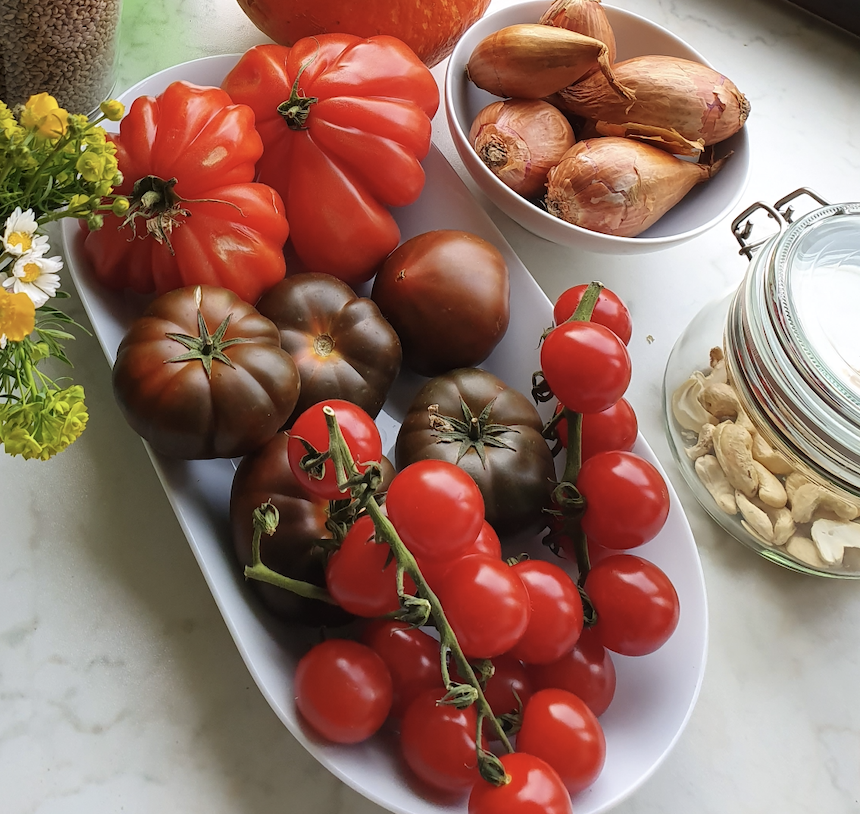
(A few of the inspiring shapes of the fruit - botanically not actually a vegetable as I recently learned - that comes in over staggering 10,000 variants )
The other day when meeting a friend for a coffee she revealed a hot water bottle from her bag making me chuckle. It was her lovingly witty support for a chronic bladder infection I´ve been grappling with for the past two years, as I had just come from a long walk in the woods and being cold and damp has clearly not turned out to be helpful.
Sandwiched between the heater, the loaded bottle, and a friends dog warming our legs lying across us we launched into all the advice we had ever heard.
And while I would joyfully stand on one leg balancing a pumkin on my head while serenading soothing mantras in moments of frustration if it were to help, its been the countless small aspects that have resulted in a gradual shift over time.
Turns out, cutting out sugar (which bacteria feed on) entirely seems a game-changer as my body is slowly inching along with the process running its course, challenging my capacity for self-compassion and patience.
The Energy Equation: Man Is What He Eats
In the parts of the world where food is often a means of peculiar entertainment rather than pure nourishment, it seems logical that the topic is trending:
How we fuel our bodies directly impacts how we feel on our life-journey.
The German philosopher Ludwig Feuerbach put it straightforward: "Man is what he eats." In sports nutrition, the mantra "food is fuel" perfectly captures how athletes directly impact their performance through what they consume.
What if this isn´t for professional athletes only though, as we kind of are “athletes of life” on our daily hustle through our task lists?
This is the core principle behind today's focus on biohacking and Zone 2 Cardio—concepts currently trending fiercely in tech boardrooms. It's all about making micro-adjustments, like integrating low intensity gentle movement and soft food shifts, to maintain sustained endurance and mental clarity instead of high-instensity "quick fixes" and short bursts of speed.
There are countless examples all around us of how people consciously use nutrition to support their peak performance:
Steve Jobs was known for his highly restrictive diets, often consisting solely of fruits and vegetables. He was convinced this approach sharply boosted his energy and mental clarity, giving him an edge.
Beyoncé often speaks about her plant-based diet choices to amp up her energy and stamina, especially when gearing up for intense tours or major performances.
Resetting Our Palette: The Power of Less
Through years of curious observation, I´ve picked up on the inconvenient realities of the diminishing return of investment of anything hitting my taste buds.
Lots of sugary foods easily lead to wanting more increasingly sweet treats. Similarly, commercial food—like our favorite corner-joint noodles or restaurant meals—is often engineered with flavor enhancers and high salt levels to intensely lure us back.
It's an easy, unfortunate trick: more makes us want more, a paradox that echoes in so many areas of our life.
With colleagues, I´ve tested the theory over decades when dropping the afternoon chocolate again and again to find it tasting surprisingly more intense after not having it for a while. Simultaneously, fruit suddenly was bursting with intense flavor again as our sensitivity recalibrated.
What if we consistently underestimate how subtly adaptable our senses are?
Temporarily stepping back from whatever we have over-indulged in can effectively reconfigure our palette and balance. Our taste buds are highly susceptible to what reaches them, sending signals to our brain that then set our body on a specific course.
It's kind of like resetting our GPS of energy levels when we take a step back to check in with ourselves quite literally to see how much is enough.
On that note, if you believe the Confucian teaching of Hara Hachi Bun Me, there's wisdom in stopping when you're 80 percent full to keep yourself from becoming lazy.
This practice is common in many of the world's "Blue Zones" – areas with high concentrations of centenarians. Research suggests long-lived populations share habits like eating mostly plant-based diets, practicing moderation, and enjoying meals as a way to connect socially rather than with our phone or laptop.
Maybe some of the answers are simpler than they feel exciting.
Maybe it´s not really all that surprising that the famous “apple a day” might work out better than fries and a burger gulped down with a coffee with a double shot of syrup, cream, and sprinkles while scrolling on our phone.
The Mindless Trap: Gaining Clarity Through the Gut
In a world buzzing with food trends and diet fads, it's easy to lose sight of something fundamental: the surprisingly complex dance between our food choices, satisfaction, and energy levels.
You know that feeling when your hand reaches out for just one more cookie on dazed autopilot, even as your stomach cringes and your taste buds are way past overwhelmed? Turns out, that famous "food coma" honors its wording and can feel like we voluntarily pulled the plug on our energy reserves as we drift along in a poorly-fueled haze.
As the poignant definition of "comfort food” suggests, most of us are momentarily soothed when handed something to munch on way beyond our toddler stage.
The guy at the gas station down the road, who only ever sees me in pajamas on a late-night run when crips seem the inevitable last resort, always hands them over with a compassionate smile.
But in the long run, lulling my body to sleep with overly large amounts of anything edible has never really worked out for me – in fact, it tends to keep me awake while feeling anxiously drowsy.
What if we're just not all that present when we're eating?
Research shows that many adults regularly eat meals while distracted, primarily by screens these days. With our attention far away from what´s on our plate, it´s easy to see how we end up mindlessly eating vastly more than a needed intake.
I remember a Thanksgiving dinner with my family in the States that traditionally aligned with the big NFL Thanksgiving football game. It was bizarre how so much love was put into incredibly tasty amounts of home-cooked food that was mindlessly slung down by bodies throwing their full presence at a screen balancing overflowing plates on their knees.
It's a stark reminder of how our consumption habits in one area, like media, can directly impact our consumption of food without us even realizing it.
On an experimental note, if we know we're not paying attention anyway, we could give ourselves a gentle nudge by exchanging the habitual crisps or oversweetened popcorn for something like nuts or veggi sticks, making the automatic choice a better one.
My dad has a habit of resting his lunch plate directly on the newspaper he's reading. It's a bit of a recipe for skipping the chewing part, making the digestion a lot less smooth while missing out on the flavor altogether. We've both admitted to having had countless meals without tasting a single morsel.
Maybe there's simple wisdom in the old Zen philosophy: "When you eat, just eat."
The Allure of "Light" Fueling
So, what's the deal with keeping it lighter?
I guess it's what made me notice Officer K in Blade Runner 2049 mentioning he prefers to keep an empty stomach until the hard part of the day is done. It felt reasonable to the degree of maintaining a sense of “soberness” to not divert the energy needed for demanding tasks.
A fit-looking elderly janitor fixing the heater in our house a few weeks ago mentioned that he has not eaten anything until after his work hours for decades. Similarly, a tall, healthy-looking ex-boss of mine used to eat for the first time at 16:00 in the afternoon - a piece of simple pound cake - to enjoy cooking a dinner every evening. Likewise, a family friend doing complex demanding operations has stuck with eating only dinners throughout her whole career.
And while that’s not for me personally, all of them admittedly seem cheerful and energetic while working intensely at a fast pace with an inspiringly bright mind.
I guess there must be something to the century-old traditions of fasting in monastery settings, and retreats, with the practice being right back on trend these days.
Working in design teams, you're usually right at the pulse of every food trend. This led to some wildly interesting approaches, like a brilliantly talented designer who opted for eating only every other day, claiming her design flow was much freer on the restricted days.
Between intermittent fasting, not drinking with our meals, various plant-based diets, paleo, juicing, only ever snacking, keto, gluten-free, and intuitive eating, it's taken me decades to figure out what ultimately feels best for me.
Our Environment & Our Choices
Granted, overall, the fashion industry isn't exactly the poster child for healthy eating habits. I've been there, done that, having battled my share of challenging eating disorders fueled further in that environment. Consequently, it’s made me an expert (albeit an unwitting one) in the art of finding balance with food to create a joyful relationship.
Since early years, I've been a human yo-yo, weighing anywhere from a third less to almost double my current weight. I've voluntarily refrained from eating to the extent of barely recognizing my slight frame in photos years later while swinging to the other extreme through binging, trying to ease an unquenchable void food could never fill.
And while I've been maintaining a stable weight for many years now, some of those addictive behaviors partially transformed into my innate drive for endurance sports.
It's a tricky one from my experience once the metabolism is messed up. With the rise of quick-fix drugs, like using diabetes medication for weight loss, our relationship with food and body image feels like it's toeing a tough, complex line.
Maybe we should revisit the wisdom of Hippocrates from over two millennia ago when he stated: "Let food be thy medicine and medicine be thy food."
The evidence for the diminishing nutritional value of our food can be striking: I forgot a zucchini in my fridge a while ago, returning three weeks later to find it in still impeccable shape.
Intensive farming practices and the desire for constant access to all types of produce, regardless of season, have fiercely reshaped our food landscape. That Zuchini definitely made me uncomfortably question the preservatives and pesticides used in modern agriculture.
It's inconveniently safe to assume that every food choice we make has more far-reaching implications than we like to think.
Simple Wisdom for Sustainable Fuel
It seems the closer we get to simplicity, the more we learn about complex science, like the gut microbiome—those trillions of tiny citizens in our digestive system. Research suggests they’re the unseen hands managing our digestion, immunity, and even our mental clarity.
This might also explain why so many people are drawn to plant-based diets. It’s not just a trend; diets rich in whole plant foods seem to be the most reliable way to nourish this inner ecosystem, setting us up for greater endurance and lower long-term risk.
Perhaps moderation, truly paying attention, and listening to our own bodies can take us further than any new diet spreadsheet ever could.
I realize through my own challenging relationship with food, it can be a tough journey. Yet, it's encouragingly worth it when you find yourself forgetting to think about your food and instead just get back to actually feeling and enjoying it.
Questions for Your Daily Journey:
When you're eating for peak performance, what foods do you genuinely feel make you your best?
What's your "on-the-go" backup meal for those hectic days when you need high-quality fuel, fast?
Are there any food trends or diets you've explored that have had a lasting, positive impact on your health or well-being?
In what ways do your daily food choices align with your larger lifestyle and values?