What if it’s the Way You Look at Life?
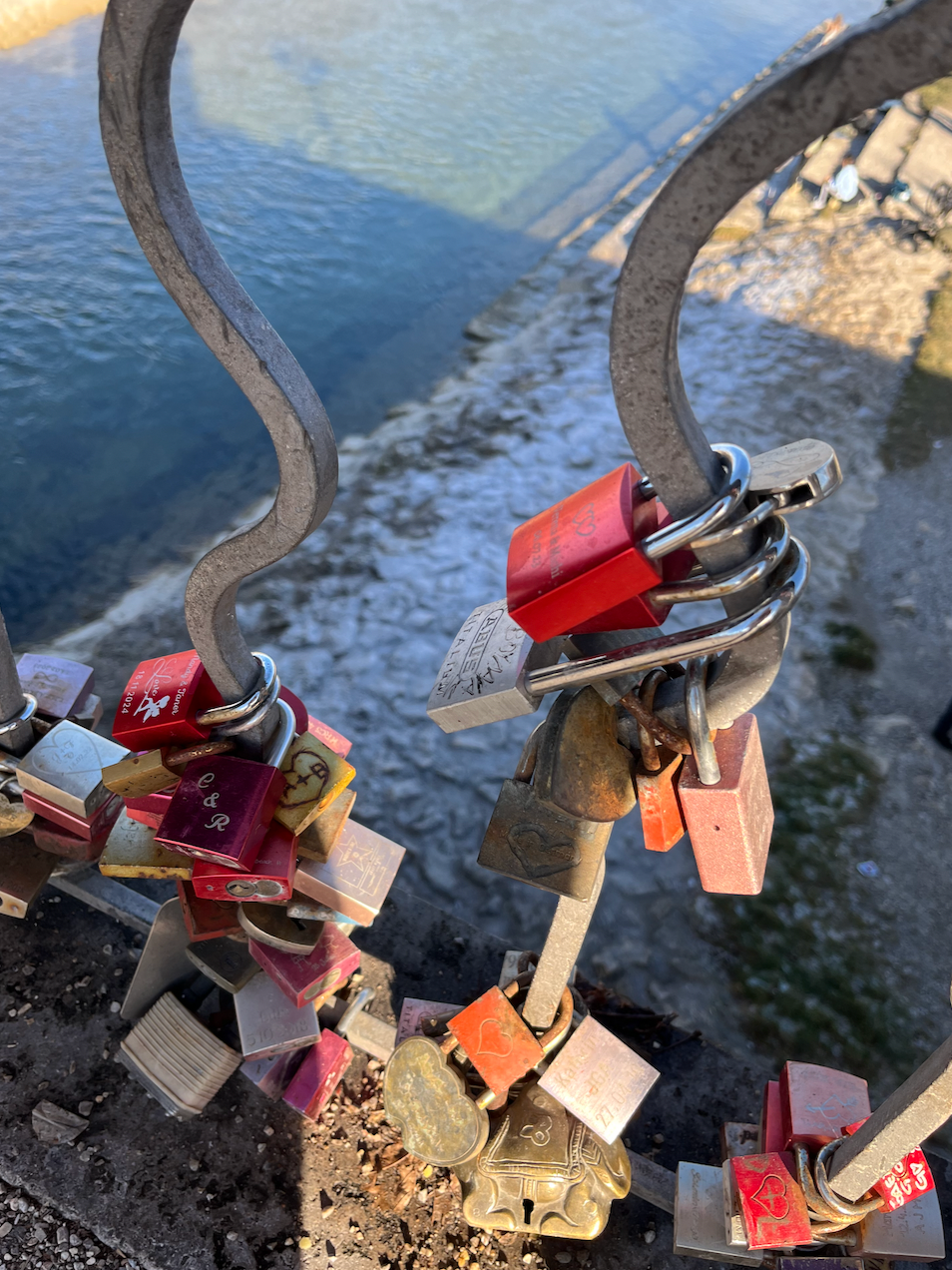
crossing Wittelsbacher bridge in Munich
Upon landing from another fall due to her disability, my mom once quipped alongside my exasperated assessment of the situation: “Life looks at you the way you look at life.”
We sat on the pavement with me feeling anger rising while she was laughing. She explained that her response propels her toward getting up again rather than letting a darker mood get the better of her.
Her response keeps her moving.
It´s the push she gives herself.
What you see depends on how you look.
It changes everything.
Missing connecting flights brought me to places I never planned to see. Choosing how to approach the detour was on me.
Our personal lens is always shifting.
The markers are unsteady.
A great-aunt of mine used to insist my father use the cheap whiskey for her and save the expensive bottle for guests. When he gave her a questioning look, she explained that she drank for the effect, not the flavor.
You see what others see—and take something else from it.
It´s up for interpretation.
For me, going up a mountain feels necessary.
For others, it makes no sense.
How something registers reveals your dreams and insecurities.
When the trend of perms was at its height, my friends got frizzy treatments while I did everything possible to flatten my curls. As a kid, I made hairbands out of straight Christmas tinsel to achieve my ideal style.
How you look at something changes how it feels.
It´s subjective.
When traveling in Uganda and the DRC my ex-boyfriend’s military background led him to view the heavy military presence and armed guards as protection, while I felt threatened.
In contrast, when visiting a relative’s home in a village in Italy where the doors are rarely locked and the hiding place of the key in the garden is known to many, I feel safe.
I wonder if security cameras of well-kept mansions invite attention, while a rundown exterior suggests there’s nothing worth taking.
Maybe the assumptions you make about something have more weight than what you’re looking at.
When I return to a place I’ve lived in, it often feels different. As the stories I lived there pale, it clears the palette.
Not because the place changed—but because I did.
For me, it took the collision of losing my job, my relationship, and our shared home—along with a heavy skiing accident and my dad waking from a coma to not recognize me for months—to shift how I saw things.
It was rough and tender all at once.
It pushed me towards a second take.
I felt more connected, raw and real when things fell apart than when everything worked.