What if Slowing Down is What Gets us Ahead?
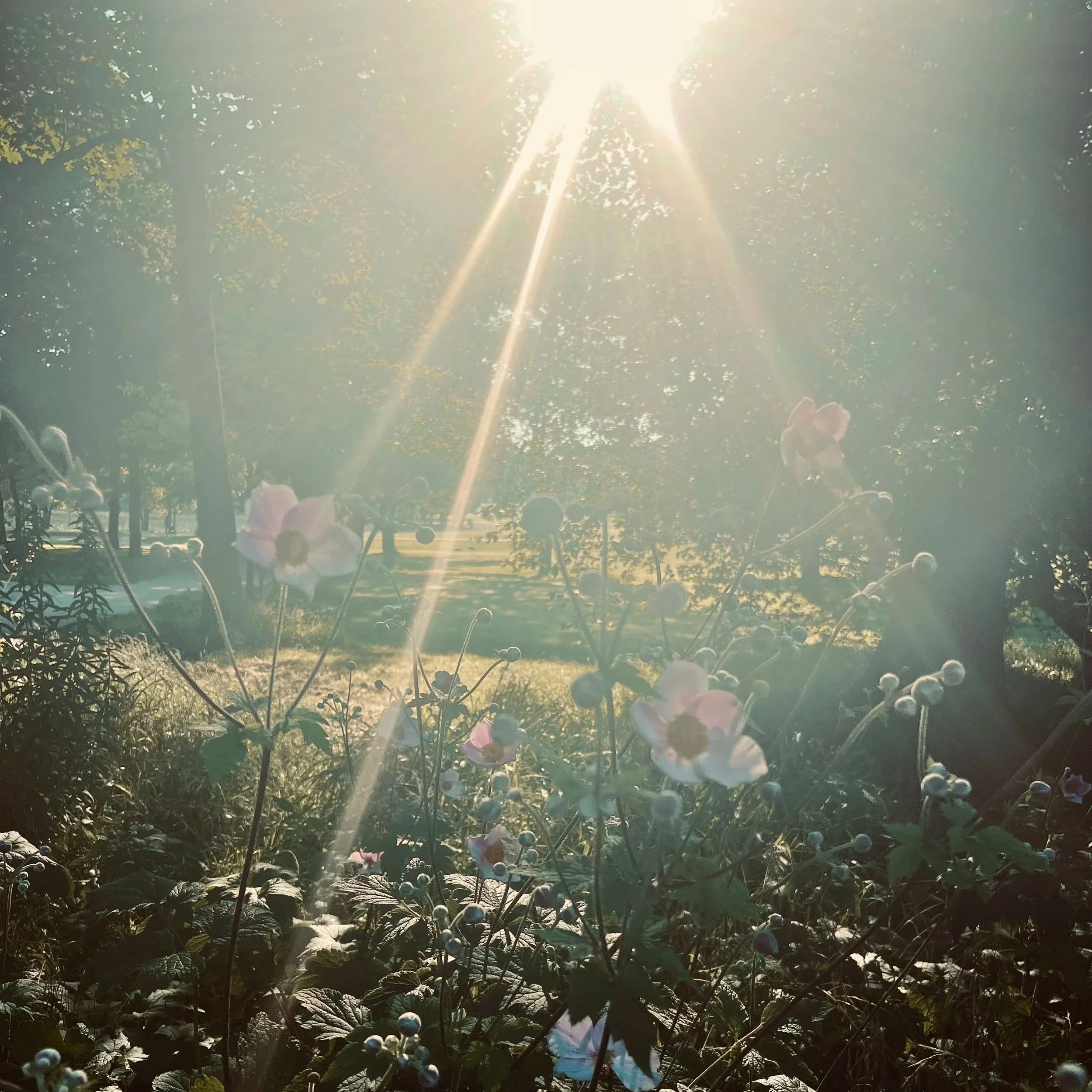
(Tuning into the quiet rhythm of a heatwave morning)
In a world where constant busyness is frequently sported as a bewildering status symbol, the hardest thing seems to be to step on the brakes.
What if skipping the pauses is shortsighted, though?
What if burning down our energy all the way vastly diminishes our overall capacity to keep going?
What if pausing is the most efficient way forward?
When pointing out that he is in a hurry, the character of a nun in Claire Keegan’s book “Small Things Like These” advises a man delivering coal to her place: "Then stay until the urgency falls away from you."
What if it's precisely that underlying urgency we move through the day with that wears us down so fast?
Have you ever noticed how a crisp pause can support your energy levels considerably longer than when you use the full supply up in one go?
What if the art of pausing is about adjusting our speed at times?
What if throughout the heat of summer, moving at a more measured pace is the key to maintaining vibrancy?
What if we learn to switch gears?
The Nigerian philosopher Bayo Akomolafe, founder of The Emergence Network, which explores alternative responses to global crises, emphasizes that “The times are urgent, let’s slow down.”
Life has a reliable way to make me “take the foot off the gas,” as the German saying goes. It shows up as muscle tension, headaches, digestive irregularities, anxiety, constantly dropping things, or stumbling over my own feet. It's like a navigation system losing its signal: whenever that happens, the literally most straightforward way is often to pause until it reconnects.
What if we start to listen to our energy levels, instead of insisting they function according to a mental agenda?
What if we listen to our body, as it knows best when it’s time to take a break?
What if pausing is the key to digesting life’s input best?
While working with a psychoanalyst in Spain after years of habitually racing along up to a breaking point, I realized I had lost the ability to identify what I was feeling. Numbed by constant input, I often could no longer distinguish between tiredness, anxiety, desire, or hunger.
There was this constant itch to keep on going while the adrenaline I was running on showed to be an inconsistent energy source that failed as soon as I stopped.
The character Demon Copperhead captured his addiction to constant escape well when stating :“A blown brain will reach for any sideshow to dodge the main event.”
What if it's not the coping mechanisms we need to change, but the lifestyle that requires them in the first place?
What if our mechanism of constant craving is a warning signal, rather than something to constantly fulfill?
Throughout my life, a questionable strategy of mine has been to override unpleasant feelings with the next plan of action. There was this urge to seek and chase a schedule I felt perpetually behind on as a way to avoid discomfort.
Unable to bear ambivalent feelings, I developed a habitual reflex of anxiously pushing for the next experience before any inner processing could fully take place.
It's turned out, though, when we fail to digest what we're experiencing, our system becomes overwhelmed by unprocessed data. It’s when our natural recovery mechanisms stop functioning as we override their capacity to reboot.
Anne Lamott offers the simple yet profound solution that: "Almost everything will work again if you unplug it for a few minutes, including you.”
What if you give that a go?
What if pausing does not make you lose time but gain efficiency, as it allows you to recharge your energy reserves?
What if conscious pausing lets you face life with greater clarity and intention?
Zen Buddhist teacher Haemin Sunim suggests in his book The Things You Can See Only When You Slow Down that "In stillness of the pause, the entirety of our being is quietly revealed.”
What if pausing is the space that lets us reconnect with our essence beyond all the noise?
What if pausing is one of the most underestimated aspects of any creative process?
What if the pause is the missing link?
What if it's the link to your resilience, your capacity to feel, and the ability to tap into your intuition, creativity, and innovative mind?
The Power of the Pause, According to Science
Recent research supports the idea that taking breaks isn't just a nice idea—it's essential for maintaining focus and peak performance. Studies have shown that brief diversions from a task can significantly improve your ability to concentrate for prolonged periods.
The University of Illinois, for example, found that the brain's attentional resources drop after focusing on a single task, and brief mental breaks can restore focus. Other research from the productivity app DeskTime found that the most productive employees worked for 52 minutes and then took a 17-minute break.
These findings suggest that regular breaks are not a luxury but a crucial strategy for boosting efficiency and sustained output.
The idea that pausing is key to processing isn't just supported by research—it's something I experienced firsthand when growing up.
As a child, I always looked forward to the intermissions during operas and concerts we attended because of my fragile attention span. It was the breathing space I craved to give me time to digest the drama, beauty, and longing evoked by each performance.
As Truman Fisher, an American composer and conductor, aptly stated: "The pause is as important as the note."
What if the pause is the crucial stroke?
French author Sylvain Tesson, who spent six months alone in a Siberian cabin, captures the profound impact of pausing from life's busyness in his reflections: "All I had to do was ask of immobility what travel no longer brought me: peace."
What if pausing is not a weakness but a crucial part of advancing our deeper strength?
On a global scale, the COVID-19 pandemic brought an unprecedented pause to our lives. The largely spread high-speed, constantly-on-the-go lifestyle was brought to an abrupt halt for most of us.
On a personal level, this intervention of life as it had appeared to me so far revealed how dependent I had become on the dopamine rush from constant activity and novelty. It forced me to realize the most crucial aspect I had lost touch with – myself.
As the pandemic slowed life down, I extensively explored the nearby woods, finding myself lost both literally and metaphorically.
Nature offers inspiring examples of pausing as a natural part of life's cycle. Seeds lie dormant until it's time to sprout, animals hibernate when nature calls for rest, and the most powerful creatures like lions and tigers sleep up to 20 hours a day.
There seems to be undeniable power in pausing with full attention.
Do you ever take a moment to look up from what you are doing?
Do you catch yourself accelerating when anxiety rears its challenging head or a deadline looms? Do you take the cue to slow down and pause a moment to not spin out?
Do you notice how your breathing is a natural barometer to point out when it’s time to consciously come back to base? Do you at times just sit and observe how slowing down your actual breath relaxes your nervous system?
What if you consider disconnecting from your phone for a day, not answering emails, basically not being available to reset your inner clock?
What if it’s time to consider taking a few months to recalibrate your system?
Maybe time not filled with a schedule is becoming the biggest luxury of our modern world.
Maybe being unsure of your life's direction and challenged by doubt, vulnerability, fatigue, stress, and underlying anxiety is not the moment to scatter your energy by reaching out but to focus it by reining it back in.
Stepping out of the daily race can be a powerful move to heal as you make space to feel again.
Psychologist and Holocaust survivor Edith Eger poignantly states the case: “You cannot heal what you cannot feel.”
What if pausing is the most life-changing recovery mechanism you can engage with?
What if pausing in the smallest way can have the biggest impact on your daily life?
The Life-Altering Impact of the Pause Before Reacting
As the telling proverb to “save ourselves from ourselves” indicates, the most crucial pause might be the single deep breath we take before reacting.
It’s the gap where we reclaim our power, preventing us from “flying off the handle.”
It’s the most life-changing action between our emotional triggers and reactions to them.
It's what can enable us to hear our own intuitive voice beyond the noise.
A pause can literally save us from destroying relationships in moments of overwhelm that blur our vision and flood our senses.
By interrupting our reflexive autopilot reactions in daily life, a pause can be our key to freedom of choice.
Ask yourself:
Do you ever feel overwhelmed by everything you're taking in, struggling to process it all?
Do you judge yourself for needing rest or stepping back?
Do you take time to pause during your day?
When you do pause, do you feel guilty—spending the time worrying about what’s next instead of truly switching off?
And where does this judgment come from?
Is it conditioning you can choose to step away from?