What if an Apparent Detour is the Way?
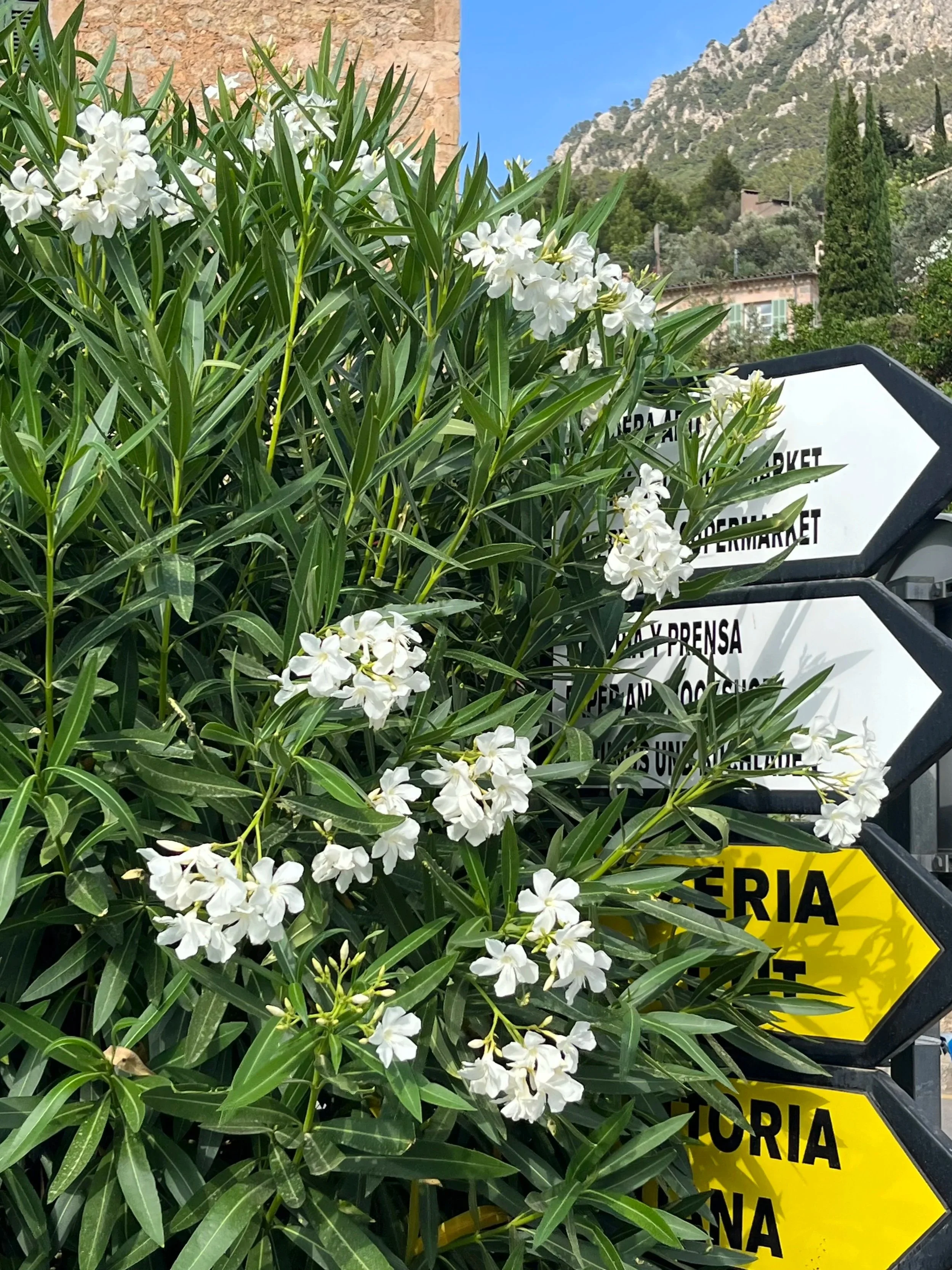
(what if the obstacle is the path? - Balearic Islands)
This week I had an enriching exchange with a friend about finding your voice. About how to find out what’s the best way to contribute your talents. About feeling your own beat in a world screaming to outsource your capacity to think for yourself to AI, algorithms and countless loudly proclaimed opinions hovering in our periphery, distracting us from connecting with your inner North.
Our exchange made me ponder:
What if all the things we tend to dismiss as a detour towards "finally" arriving are simply the way?
What if we are not meant to take the so eagerly suggested shortcuts and increasingly proclaimed “life hacks” that could be seen as a smartly advertised form of avoidance, skipping the essential work of aligning with your authentic inner beat.
What if forcefully trying to speed up your journey towards a logical conclusion is comparable to ignoring your own process of alignment?
What if the Apparent Detours are the Path?
The other day I discovered a new trail along the ridge of a hill, not far from the known route I usually take on this morning walk when visiting Munich. The space felt like a natural cathedral. It was like an organically created sacred alley, hugged by trees on both sides with the light entering through the gap above the earthen path cushioned by leaves.
Admittedly, having a barely existing sense of direction has led me down a considerable amount of literal unknown paths on the frequent detours in my life.
It’s also what reliably makes me encounter spots not yet overrun by the crowds following assigned directions. It's why I frequently stumble upon inspiring places off the grid, like that ridge.
What if we Trust the Process?
What if life knows when you are ready to branch off the safely signposted main routes?
What if an apparent roadblock is life detouring you from falling off a cliff you have been racing toward?
A therapist I worked with in Germany, who grew up exploring the Swiss mountains, always pointed out that it's the detours that broaden your knowledge of the territory. She was raised to trust in her explorations, frequently going off the beaten track on her playfully adventurous treks as a kid.
When getting used to new running territory anywhere in the world, I follow a strategy from more secure to less known paths. I start with an obvious route, following other runners, then gradually take little side-routes, expanding my "grid" as I go along.
This approach to finding new trails definitely includes some re-routing, dead ends, getting temporarily stuck, and sometimes having to leg it back home before dusk. But it also reveals magical sunrises, that joy of discovery, and that tingling "aha!" feeling when routes suddenly connect into a bigger picture. (Admittedly I might owe that more frequent lightbulb moment to that lack of sense of direction.)
Just like when expanding your habitual terrain, the most innovative ideas often blossom through deviations from a mapped out approach.
In my experience working in the creative field it's frequently been detours that have resulted in proposals far more original than the most meticulous plans.
History is actually dotted with famous cases where a detour led to groundbreaking inventions. These weren't planned "aha!" moments, rather beneficial accidents born from unexpected turns:
Alexander Fleming's world-changing discovery of penicillin came about when a mold accidentally contaminated his petri dishes, halting the growth of bacteria.
Spencer Silver was trying to create a super-strong adhesive when ending up with a reusable, low-tack glue that hardly anyone wanted at first, resulting in the iconic Post-it Notes.
Wilhelm Röntgen's unexpected observation while experimenting with cathode rays led to the discovery of X-rays, revolutionizing medical diagnostics.
The Fuel of Accidental Discoveries
A study by Sarnoff A. Mednick suggests that creative individuals are more likely to make "remote associations," connecting seemingly unrelated ideas, which often happens when you're off the main path.
In the role of a designer, I've often seen the amusing discrepancy of where the best ideas emerged from and what we credit in hindsight.
There was a coat that became a multi-season bestseller, where the intended luxury cashmere that never arrived was replaced with an inexpensive leftover rainproof fabric available in bulk. Technically, and logistically the incident was a huge blunder. The fabric's weight was “wrong” for the pattern, while the price didn't correlate with the planned marketing strategy. Amusingly, the coat ended up being promoted as a strategically thought out concept leading to its huge commercial acclaim as it took flight on its successful detour.
Another unplanned moment of fame comes to mind with a tea-dyed gown for a couture company I worked for, as the intended fabric dye never turned up. Forced to retrieve to the old method of using black tea in last minute panic created an unexpectedly innovative look that landed a cover story for Vogue, and was exhibited at the V&A in London.
I owe a treasured friendship to a travel disruption forcing me to route through Paris. An Iraqui friend who was living there after two major life-detours forced by war via Sweden and England, granted me shelter. She was being visited by a Swedish friend that had got equally stuck and was about to move to Munich, where I was temporarily living again at the time. This encounter, born from numerous deviations, always keeps me inspired to trust in the hidden opportunities of life's unexpected turns.
Learning on the go, experimental approaches can certainly bring about some extended detours. Yet, it's this very approach that will take you to places you didn't even know existed. It can connect you with experiences you didn’t even know you deeply craved.
While having a plan is wise groundwork to venture out from, letting it be optional might be the true mastery.
What if you take the leap?
What if you let life show you it's worth keeping our attention open for what might surface beyond a set grid?
And on a silver lining note: Having to grapple with the fear of navigating unexpected terrain improves our ability to handle change. As change is arguably the only sure constant in life, it makes it a valuable asset to exercise you ability to go with it like training a muscle.
What if we Reframe a Detour?
My adventurous spirit has definitely pushed me into the unknown more often than planned, in not always the most flattering ways.
Yet, there’s that undeniable excitement of dancing on the edge of the moment. There is the thrill of tickling my comfort zone that feels deeply ingrained in my curious nature. And there is this joy that comes from stumbling upon the unexpected, tapping into that childlike rebellious relaxedness about consequences.
What if we reframe apparent detours as the path we are meant to be on all along?
What if we refrain from questioning our past explorations as a failure, reframing it as merely bringing us to where we are?
What if what we refer to as a detour was a building block needed?
What if the apparent "obstacle is the path", as the famous Zen saying implies.
What if your resistance to something going off-kilter is the bigger issue than the deviation from a plan?
What if you are standing in your own way when refusing to surrender to the bigger picture you will never have?
Zen writer Gary Snyder encourages in The Practice of the Wild that the beaten path rarely shows anything new. He points out that it brings us home empty-handed, "while the ongoing complexity of the world is to be found off the side of the trail."
What if trusting the way is simply trusting life?
What if you allow the vibrancy of life beyond the mapped out territory to touch you?
What if you listen to the pull of your soul that knows you are meant to expand beyond the set expectations and obligations you got yourself tangled up in all by yourself?
What if being the initial author of your self-limiting confines also makes you the author that can choose to go beyond?
Deliberately Inviting a Detour to Expand
While detours are, by definition, rarely intentional, I've discovered that taking deliberate detours can be an inspiring way to challenge the autopilot motions we tend to go through life with to protect ourselves from the dreading fear of the unknown:
Consider getting off a train stop before your intended destination to find new streets that are close to your usual route, yet completely unexplored by you.
Consider leaving the motorway at an earlier exit to take in what you are passing by daily? Do you let yourself tap into the relaxing vibration of the scenic routes a turn away?
Consider trying a different dish off the menu you routinely choose the same thing from.
Consider that the joy of exploration doesn't actually require grand risks. Consider that those risks of going off-the grid are worth taking.
A practice of allowing these kinds of small adventures has an underestimated ripple effect on daily life. Inviting a slight deviation from what you consider the norm keeps your senses sharp. It's your threshold to keeping your curiosity alive. It's what grooms your mind to trust the power of limitless possibilities beyond the safe road leading to what you already know.
What if you remind yourself that, even in your most routine journeys, there's potential for discovery and unexpected delight?
What if It’s Worth the Leap?
Helen Keller, who inspiringly overcame the challenges of losing her sight and hearing at 19 months, stated: "Life is either a daring adventure or nothing at all."
What if embracing the rattling discomfort that comes with adventure is a gateway to a life you won't constantly seek to escape from?
What if tickling that edge of your comfort zone will take you beyond chasing guaranteed comfort to recover from your tiring route of fulfilling a catalogue of expectations?
What if an adventurous spirit is your default setting?
What if you have overwritten your innate curiosity with non-stop planning because you're scared of losing control?
What if you never had control, though?
What if embracing detours as your path enhances your ability to think on your feet, and increases your resilience?
What if surrendering to the apparent obstacle is how you build the confidence needed to handle the next step you didn't even imagine you could dare take?
What if embracing detours is your chance to gain trust that life will catch you if you leap?
Consider this:
How disturbed are you by a deviation from a plan?
Do you tend to walk the beaten path, or seek new routes?
Can you warm up to intentional detours to expand your comfort zone?
What is holding you back?